South Devon
Mobile Horse Clipping in South Devon
Calm, careful clipping at your own yard — from a quick bib clip to a full winter clip — for horse and pony owners across Newton Abbot, Totnes, Torbay and the Dartmoor fringe.
Enquiries are welcome now. Prices, availability and the exact area covered are confirmed when we reply.

Clear pricing
A price confirmed before anything is booked
Mobile service
Clippers come to your own yard
Calm approach
Unhurried, patient clipping
Local coverage
Newton Abbot, Totnes, Torbay and the moor edge
The service
Clipping at your own yard, with no travelling and no fuss
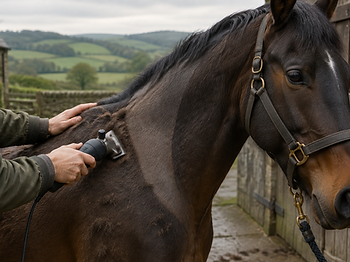
Looking for someone to clip your horse or pony? South Devon Horse Clipping is being set up as a mobile clipping service for horse owners across Newton Abbot, Totnes, Torbay and the surrounding parts of South Devon.
Whether you are after a straightforward bib clip, a trace clip for a horse in regular work, or a full winter clip, you can send an enquiry with your yard postcode and the type of clip you are after. If you are not sure which clip suits your horse, say so — that is a normal place to start, and we can talk it through.
Because the clippers come to you, your horse stays in familiar surroundings with their own field mates and routine. There is no loading, no travelling and no strange yard to settle into, which makes a real difference to a youngster or a horse who finds clipping a worry.
This is a new service, so a few details — including prices and day-to-day availability — are still being confirmed. Send your details and we will be straightforward with you about what is possible.
What we can help with
- Bib, Irish, trace, blanket, chaser, hunter and full clips
- Horses and ponies of any size, including natives and cobs
- First clips and horses who are unsure about clippers
- Several horses on the same yard in one visit
- Advice on rugging and aftercare once the clip is done
Send a photo and a line about your horse's work and turnout if you would like a recommendation before you book.
Clip types
Popular horse clips, explained plainly
A choice of practical clips to suit your horse, their workload and the season. Each one is described in full on the clip types page.
Bib clip
Hair taken from the front of the neck and chest, sometimes continuing under the belly to the girth.
Find out moreIrish clip
Removes hair from the neck and behind the elbows, where horses sweat most.
Find out moreTrace clip
Hair taken from the underside of the neck and belly, up to the tops of the hind legs — the height depends on how hard your horse works.
Find out moreBlanket clip
Hair removed from the neck, shoulders, belly and flanks, leaving a blanket-shaped area over the back and loins plus hair on the legs.
Find out moreHunter clip
Hair removed from the body, neck and head, leaving the legs and a saddle-shaped patch over the back.
Find out moreFull clip
All the hair comes off, including the legs, head and ears — the clip for a horse in very hard work.
Find out more
Ask us about a chaser clip, or legs and faces — those are covered on the full clip list.
How it works
Three simple steps to a clipped horse
No accounts to set up and no online booking maze. A short enquiry is enough to get things moving.
- 1
Tell us about your horse
Send the clip you would like, or ask us to advise, with your yard postcode and how many horses there are. A photo helps.
- 2
We confirm the price and a date
You get a clear price for the clip, with anything extra explained, before anything is booked in.
- 3
We come to your yard
All you need is a clean, dry horse and a dry, well-lit space to work in. We will confirm what else is needed when we arrange the visit.
Areas covered
Clipping across South Devon, village by village
We travel to private yards, livery yards and field-kept horses across Newton Abbot and Teignbridge, Totnes and the South Hams, Torbay, and Ashburton and the Dartmoor fringe.
- Newton Abbot & Teignbridge
- Totnes & the South Hams
- Torquay, Paignton & Brixham
- Ashburton & the Dartmoor fringe
Not sure whether your yard is within reach? Send the postcode and we will tell you straight away.
Check your areaChoosing a clip
Matching the clip to your horse's work
Choosing a clip comes down to how hard your horse works, how much they sweat, how long they are turned out, whether they are stabled, how well they keep warm and which rugs you already have.
The golden rule is to start smaller: you can always take more off in a few weeks, but you cannot put it back. If your horse lives out and is ridden a few times a week, a trace or Irish clip will usually do the job without committing you to heavyweight rugging.
Compare every clip in detail, or send your yard postcode and ask for advice.
| Your horse | Clips to consider |
|---|---|
| Light work — up to about three hours a week, living out | Bib, Irish or a low trace |
| Light to moderate work, sweats when ridden | Irish, or a medium trace |
| Moderate work — four or five sessions a week, some jumping | Blanket, chaser or a high trace |
| Hard work — fast work, jumping, hunting or competing | Hunter or full |
| A first clip, or a young horse | Bib or Irish |
Before the visit
Getting your horse ready for clipping day
A little preparation makes an enormous difference to how the clip looks and how settled your horse stays.
- A clean, completely dry coat — clippers will not cut through mud or damp hair.
- No coat shine, dry shampoo or spray-on products on the day.
- Mane and tail tied out of the way, and any mud brushed off the legs.
- A dry, well-lit, level space with somewhere to tie up safely.
- A haynet, and a calm friend to hold if your horse is young or worried.
- Tell us about any skin conditions, sweet itch or sore patches beforehand.
Calm, careful handling
Clipping goes best when a horse feels safe. Horses are given time to see and hear the clippers before anything starts, work begins somewhere they are comfortable, and a smaller clip done well always beats a big one rushed. If your horse is young, has never been clipped, or finds clippers worrying, tell us when you enquire and we will plan for it together.
Help for nervous and first-time horsesClean kit, every horse
Skin infections such as ringworm can be passed on shared equipment, so blades are cleaned and disinfected between horses. If your horse has any skin problem, please mention it before the visit — sometimes it is worth waiting until your vet is happy.
Several horses on one yard?
If a few of you at the same yard want clipping, they can be done on one visit, which saves travelling for everyone. Yard managers are welcome to get in touch to arrange a clipping day and we can talk through numbers and timing.
Arrange a yard visitWhen to book your clip
Winter coats come through from around mid-September, and most clipping is done between September and March. October and November fill up fastest, and most horses need two or three clips over a winter, so it pays to get in touch before the coat is already thick.
Visits arranged across Newton Abbot, Totnes, Torbay and the Dartmoor fringe.
Common questions
The things horse owners ask first
Straight answers about timing, preparation and rugging — with more detail in the full FAQ.
Enquiries
Request a quote
Tell us a little about your horse, which clip you're after and where your yard is. We'll use those details to look into your enquiry.